Coarse Sand & Fine Sand Delivery
A Trusted Choice in NYC for Sand Delivery
Atlas Roll-Off, located in Brooklyn, New York, provides delivery of both coarse sand and fine sand to customers across the greater New York City area. When it comes to which type of sand to use, there may be some notable differences. If you are looking for sand delivery, please reach out to us today and get a quote for the sand you need.
Order Sand Delivery
When you reach out to Atlas Roll-Off, we can go over the fine sand and coarse sand options available to you. As well as our pricing options and delivery within the greater NYC area.
General Coarse Sand Information
Coarse sand is widely used in construction for making mortar, stucco, and other cement-based materials. Its gritty texture helps create a stronger, more adhesive mixture that holds together firmly once dry.
In addition to construction, coarse sand is often mixed into concrete and used to form smooth, stable bases for paving projects. It also promotes efficient water drainage in gardens, making it ideal for landscaping applications.
Beyond these uses, coarse sand can be used to fill sandboxes, improve traction on icy surfaces, and serve as a safe surface for playgrounds or decorative material in aquariums and other outdoor designs.
6 Applications of Coarse Sand
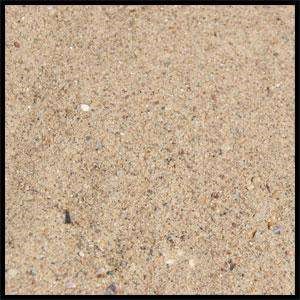 Coarse sand has several practical applications. Here are 6 general uses of coarse sand:
- Concrete mixing: Commonly used for mixing concrete, as well as providing strength and durability to structures.
- Adhesive mixtures: Coarse sand is commonly used to create more adhesive mixtures, as it helps to make various materials stick together when they dry.
- Water drainage: Coarse sand is able to facilitate better water drainage when laid out properly.
- Flat, stable foundations: It is perfect for creating flat, stable foundations for paved areas.
- Traction control: Great for use of icy roads and providing extra traction for vehicles.
- Sandboxes: Coarse sand is the most popular choice to fill up sandboxes.
It is important to choose the right sand for your project. Let the team at Atlas Roll-Off help you with all of your sand delivery needs.
Coarse Sand Benefits
When properly using coarse sand, there are a few great benefits. Here are some of the most notable benefits.
- Excellent for drainage and stability.
- Offers long-lasting results.
- Versatile for various outdoor uses.
- Has ability to strengthen concrete and mortar mixes.
General Fine Sand Information
Fine sand has smaller, smoother grains that make it perfect for detailed finishing work and softer surface applications. It provides a clean, even texture that’s easy to work with.
5 Applications of Fine Sand
Here are a few common applications of fine sand.
- Brick and Block Mortar: Fine sand creates a soft, workable mix that adheres well to surfaces.
- Landscaping & Topdressing: This type of sand improves lawn soil structure and encourages healthy turf growth.
- Paver Joint Filling: Use fine sand to fill joints between paving stones and bricks for a polished look.
- Plastering and Rendering: Fine sand produces a smooth, professional finish on walls and ceilings.
- Play Areas & Sandpits: Fine sand is safe, soft, and clean, which makes it great kid's play spaces.
Fine Sands Benefits
There are four great benefits of using fine sand when applied properly. Those benefits are the following:
- Offers smooth texture for finishing work.
- Clean and safe option for residential or play use.
- Great for using for fine detail projects.
- Nice surface quality.
Is coarse sand the same as sharp sand?
No, coarse sand and sharp sand are not the same. Ultimately, these two types of sand differ due to their particle sizes, with sharp sand being finer than coarse sand and having a much smoother texture. And since sharp sand is a much finer grade of sand, it is better for laying paving or as part of a bedding layer beneath blocks or patio slabs.
Whereas coarse sand is made up of larger particles, while also having a grittier texture to it compared to sharp sand. Coarse sand is best used for mixing with cement to make mortars and plaster.